
ACN Advance - November 2019
ACN Providers Drive Higher Quality, Lower Costs
APM Bonus Payments an Additional Benefit for ACO Participants
Meet Dr. Sunita Gupta, East Valley Family Practice
Dana Seltzer, MD, Leads Quality and Performance Management Committee
New Requirements for PDGM Home Health Visits Begin Jan. 1
Economic Impact of COPD
Updates to Bright Health, UMR for 2020
News Roundup
Welcome, New Provider Organizations
Happy Holidays from ACN
As we near the end of a very busy and productive year, I want to express our sincere thanks for your role in ACN’s success. Dedicated and talented healthcare providers are the foundation of Arizona Care Network and this is the perfect time of year to let you know how grateful we are for your engagement in and support of this unique network. Supporting your success is the most important work we do — and the most satisfying. Value-based medicine is hard work. We appreciate the commitment it represents for you and your practice staff. That commitment does not go unnoticed. Across the country, we hear from other systems and networks that they admire ACN and see us as a leader in value-based medicine. They want to know our “secret.” And we always tell them that it’s you — our network of loyal providers who care deeply about their patients and the future of their profession. Together we are transforming healthcare to be more effective and more cost-efficient for our community. As this year comes to a close, I hope that you have the opportunity to enjoy time with your family and friends. On behalf of your executive leadership team, Happy Thanksgiving and we wish you a wonderful holiday season. Todd Ricotta CEO (interim) Executive Director, Provider Network & Government Relations

$3 Million Gainshare Distribution for 2018 Value-Based Agreements Coming in December
ACN is thrilled to recognize and reward the high quality, cost-efficient care our members received under the Next Generation ACO, Medicare Shared Savings Program (MSSP) and Aetna arrangements, which paves the way for participating primary care providers to earn financial incentives tied to outcomes from the 2018 performance year. ACN will deliver approximately $3 million in gainshare checks to participating practices in December. Per your Board of Managers’ policy, these distributions are made at the TIN Level. The leadership of each medical group or practice determines their own internal distribution policies. If you have questions or feedback, please speak with your CPC or email: practicetransformation@azcarenetwork.org. Thank you for your year-round efforts to provide effective, efficient and coordinated care for your patients. Congratulations on your success! Here are some highlights of your accomplishments during the 2018 contract year: Next Generation ACO
- 98.15% quality score
- $4.81 million in CMS cost savings
- Second consecutive year earning gainshare
- 10x increase in net shared savings to the ACO
MSSP
- 83.8% quality score
- $3.35 million in CMS cost savings
- Total medical cost of 3.9% below CMS benchmark
Aetna
- 100% quality score
- Earned gainshare for fourth consecutive year
- Positive performance for both self-funded and fully insured populations
Since 2013, ACN’s network of primary care physicians and specialists has saved nearly $50 million in total medical costs compared with members not managed under value-based contracts. Gainshare incentives are a testament to your practice’s dedication, hard work, and proactive approach toward patient care.
APM Bonus Payments an Additional Benefit for Medicare ACO Participants
ACN’s Next Generation and Medicare Shared Savings Program Track 1+ ACO’s both qualified as Advanced Alternative Payment Model (APM) entities in 2018. Just as medical groups that participated in ACN’s NGACO in 2017 recently received bonuses from Medicare under the Quality Payment Program, medical groups that participated in Arizona Care Network’s NGACO and MSSP Medicare ACO’s in 2018 were excluded from MIPS for the 2018 reporting year and are eligible to receive bonus payments from Medicare in 2020. Providers can log into the QPP website for more information. Additional details about how the bonus is calculated is available in this fact sheet from CMS. Please contact your Clinical Performance Consultant if you have any questions.
Meet Sunita Gupta, MD, East Valley Family Practice, ACN Board of Managers
Dr. Sunita Gupta is a primary care physician who operates East Valley Family Practice in Chandler. She joined ACN in 2015, and currently serves as a member of the ACN Board of Managers after previously serving on the quality, finance, and payer contracting committees. Dr. Gupta completed her family practice residency at Southwest Washington Medical Center and moved to the Valley in 2009. What led you to join ACN? I see myself as a health educator for my patients. I enjoy all aspects of my practice, especially listening to my patients and forming long-term relationships, which I feel are the cornerstone of preventive care. I joined ACN in 2015 since we share the same vision: to sustainably deliver better care for my patients through collaboration and smarter healthcare spending. What was appealing about being part of ACN? Arizona Care Network is a group of highly specialized and motivated people who move towards a common goal. At the board of managers meeting, we discuss multiple aspects of current healthcare, challenges, cost-effective high-quality care, networking, review and approve the work of different committees. I highly value the importance of regional provider POD meetings that occur on a regular basis, bringing the ACN team, primary care providers and specialists together. It gives a great opportunity to meet each other in a casual setting and share insight with your colleagues. I would like to see more primary care providers and specialists joining ACN. Why is care coordination between primary care physicians and specialists important? I strongly believe that patient care is teamwork involving patients and their families, primary care provider, support staff, care coordinators, specialists, pharmacy, hospital personnel and others. It's very important for providers and specialists to work together, to be able to communicate via a common platform to optimize care, to be a part of the same network for cost-effectiveness. It helps to close gaps in care effectively and improve overall health. I have called in-network specialists on various occasions to expedite a consultation to avoid unnecessary emergency room visits. The patient feels more confident about their health if their primary care doctor and specialists communicate and coordinate their care. Any advice for small-business practices and providers who might have to be involved in many different aspects of their business? I'm a solo private practitioner, seeing patients in an outpatient setting. Before I joined ACN, I did not have much contact with specialists or hospital personnel. Now I get regular training by ACN staff through personal meetings in my office. We discuss quality measures, incentives, networking, cost reduction measures, care coordination, coding tips and more. I also attend POD meetings regularly and get to meet with colleagues and specialists in my area. And due to network efforts, more patients come for annual wellness visits. I am proud to be a part of the ACN family and would highly recommend primary care providers and specialists to join the team.
Dana Seltzer, MD, AZ Sports Clinic, Leads ACN Quality and Performance Management Committee
Dr. Dana Seltzer was recently named ACN’s Quality and Performance Management Committee Chair and has served on the Board of Managers since ACN’s inception in 2013. Dr. Seltzer is an orthopedic surgeon who recently celebrated the first anniversary of owning his own practice, AZ Sports Clinic, in Peoria. He previously helped establish an orthopedic program within Abrazo Medical Group, where he served as director and department chair. He also served as a faculty member at Maricopa Medical Center Orthopedic Residency and its program chair for five years. Following graduation from USC medical school and residency at the University of Miami, Dr. Seltzer completed a sports medicine fellowship in Los Angeles and a shoulder surgery fellowship in San Antonio before moving to Phoenix in 1993. Why did you decide to join ACN? The whole concept of ACOs was a new thing, and the idea was you either participate and help direct where things go or stand on the sideline and have others decide for us. I wanted to be involved and see how the changes were going to shape medicine. I didn’t think it should just be primary care providers, that specialists can direct how things change. The best way to do that is to be a part of improving the quality of healthcare, creating cost efficiencies, improving communications, and minimizing repetitive tests that are often a drag on our medical system. These are things that needed to be addressed moving forward, and I’m proud of being a part of this. How would you like to improve providers’ experience as part of the Quality Committee? I think everyone is still struggling to get timely information about delivering healthcare, so we’re making decisions from a year or six months ago, without the real time data of how healthcare is occurring. The fastest you can shift is realistically two years before you see an effect. That’s difficult. I do see that changing and I can see us getting to the point that we have good, valid, real time data to assess treatments along with who’s doing well and why. What benefits have you seen from being part of ACN? It greatly enhances communication between PCPs and specialists which enhances quality of care. You know who’s in the community and doing what. In any given ACO you have a group of people that are working together to take care of patients and the enhanced communication between those people improves care in different ways: Knowing what’s going on with patients minimizes repetition of tests and delays in treatment from not having information. You can take riskier patients and create a documented pathway that improves care because you can help a patient follow the care plan. Autonomy for providers is a major pillar of ACN. Why is that important? It’s something that ACN does a great job recognizing: every practice is different, and much different from a one-person business to a 20-person specialty group. As you bring everything together you recognize the small group practices bring a lot to the table. Individualized care at smaller practices is a different system, so challenges to manage and organize care for these patients is very different. You can turn a boat on a dime but not a cruise ship. For small, independent providers, what are the benefits of being involved in ACN? Medicine and its delivery changes so much that if you’re not a part of something like this, especially as a specialist, then you won’t have much of an opportunity to better understand how things change and to be prepared for changes that are always coming. It’s important to be part of the business model of medicine. The environment to move into a community and set up your own practice is rarely feasible. I did it because I was in the community for 30 years, so name recognition and contacts that come along with it help a lot. Being part of a structure can make a huge difference. ACN has done the best at identifying these structures and supporting practices, large and small. What aspects would you like to see improved for providers affiliated with ACN? One of the things we’re struggling with is figuring out how we’re going to manage a referral network system so the PCPs know who can communicate best and get referrals to specialists within the system and keep everyone aligned. Those are big-picture items that we need to solve this year. I’ve enjoyed my participation and learned a tremendous amount about PCPs’ functions and expectations, which is extremely valuable. It has greatly enhanced my own understanding of practicing medicine beyond my own practice. ACN has a lot of tools that allow new practitioners to get started on the right foot. Any advice you’d share for providers new to the network? There are plenty of ways to participate in committees and things that allow new providers to have a voice. It’s very inclusive. We look for those who want to participate and move the organization forward. The way to make it work for you is to learn because the more you know about it, the more beneficial it can be to you and your patients. Healthcare is very complex. It’s crucial to be involved in an organization with a great network of talented and experienced people knowledgeable about the business of medicine in Arizona.
The Patient Driven Grouping Model (PDGM) is a reimbursement program under CMS for home health agencies that provide care for patients with complex conditions. Beginning Jan. 1, 2020, PDGM will have several new guidelines and regulations, including:
- Additional documented specific patient symptoms and causes
- Primary diagnosis not appearing on the Medicare Clinical Grouping list will not be considered a valid primary diagnosis
- Transition from 60-day to 30-day billing cycles in 2020. Medicare requires all orders, including Plan of Care, returned with signature, date and time before any billing is completed
Additionally, frequently used diagnoses no longer allowed under PDGM include:
- Muscle weakness
- Debility
- Abnormal gait
- Joint pain without a specific cause
PDGM recommends assigning a specific contact person within your practice as a liaison for home health agencies. You may download additional information from CMS. If you have any questions or would like more information about PDGM changes, please contact Marie Fredette with Arizona Association for Home Care at 480.491.0540 or visit their website. *Information and resources courtesy of Kerry Halcomb with KC's Home Health Care and the National Association for Home Care and Hospice
Economic Impact of Chronic Obstructive Pulmonary Disease
Jason Kwan, PharmD ACN Population Health Pharmacist Per the Global Initiative for Chronic Obstructive Lung Disease, COPD is defined as “a common, preventable and treatable disease that is characterized by persistent respiratory symptoms and airflow limitation that is due to airway and/or alveolar abnormalities usually caused by significant exposure to noxious particles or gases.”1 The direct costs of COPD are estimated to be $32 billion in the United States, with an additional $20.4 billion in indirect costs. Direct costs of COPD hospitalizations are significant2:
- Acute exacerbation of COPD-related hospitalizations accounted for 3.43% of all hospitalizations in 20103
- In 2008, Initial COPD admissions averaged $8,400 and a COPD readmission averaged $10,9004
Indirect costs of COPD in 20102 included:
- Total workplace absenteeism costs of $3.9 billion
- An estimated 16.4 million missed workdays
- $6,000 higher annual per-person medical expenditures
Medications results were similarly troubling:
- Patient’s nonadherent to COPD medications were likely to have more hospitalizations, higher mortality rates and decreased productivity5.
- Patients adherent to their medications had higher prescription costs but lower inpatient costs5.
- A 7-year retrospective analysis showed a 2.2% reduction in overall costs6.
Evidenced-based interventions can potentially reduce COPD-attributable costs. GOLD’s ABCD Assessment can be used to guide initial pharmacological management of COPD based on individualized assessment of symptoms and exacerbation risk. [caption id="attachment_137560" align="alignnone" width="1024"]
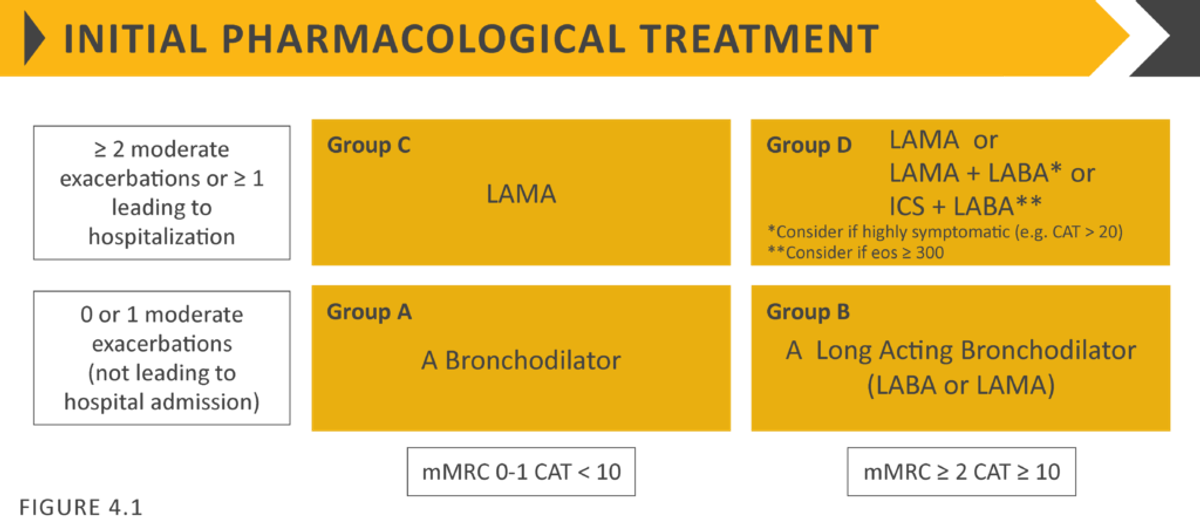
CAT, COPD assessment test; mMRC, modified Medical Research Council; ICS, inhaled corticosteroid; LABA, long-acting beta2-adrenergic agonist; LAMA, long-acting muscarinic antagonist[/caption]
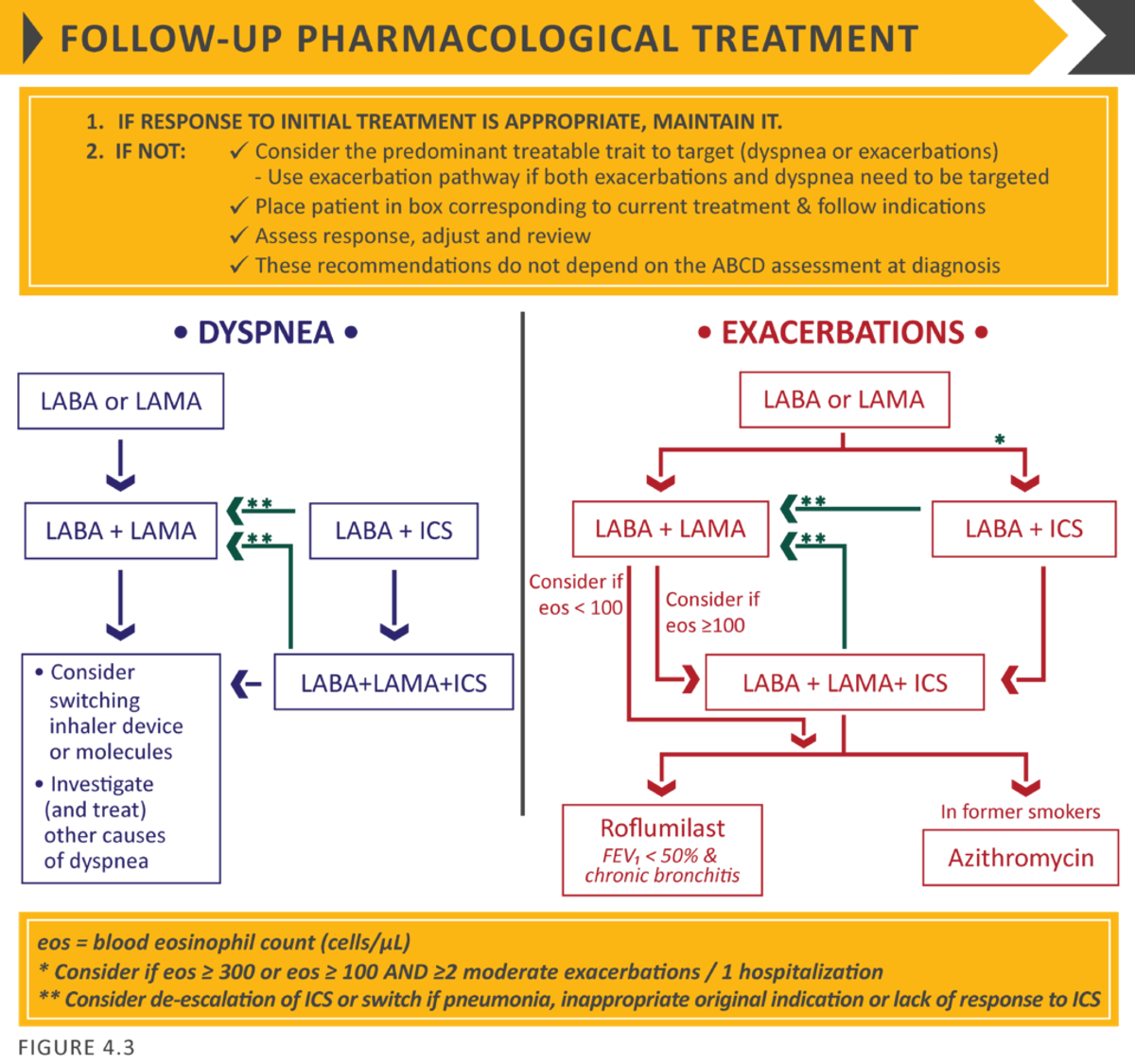
ACN providers can refer their patients to ACN's Care Coordination services to help reduce patient COPD related costs such as hospitalizations and readmissions. Care Coordination can support your practice with resources that can improve care for patients living with COPD. Please call 602.406.7226 or email carecoordination@azcarenetwork.org. References:
- Global Strategy for the Diagnosis, Management, and Prevention of Chronic Obstructive Pulmonary Disease 2019 Report. Global Initiative for Chronic Obstructive Lung Disease. Retrieved on 10/25/19 at https://goldcopd.org/gold-reports/
- Ford ES, Murphy LB, Khavjou O, Giles WH, Holt JB, Croft JB. Total and state-specific medical and absenteeism costs of COPD among adults aged ≥18 years in the United States for 2010 and projections through 2020. Chest. 2015;147(1):31-45.
- Jinjuvadia C et al. Trends in Outcomes, Financial Burden, and Mortality for Acute Exacerbation of Chronic Obstructive Pulmonary Disease (COPD) in the United States from 2002 to 2010. COPD. 2017; 14(1):72-79.
- Elixhauser A et al. Healthcare cost and Utilization Project (HCUP). Statistical Brief #121. Rockville, MD: Agency for Healthcare Research and Quality; September 2011.
- Van Boven JFM et al. Clinical and economic impact of non-adherence in COPD: A systematic review. Respir Med. 2014:108(1):103-113.
- Toy EL et al. Treatment of COPD: relationships between daily dosing frequency, adherence, resource use, and costs. Respir Med. 2011;105(3):435-441.
Bright Health In 2018 Arizona Care Network entered in to an exclusive partnership with Bright Health to offer several new Medicare Advantage Plans for residents of Maricopa County. To drive continued growth in the market, Bright Health will offer seven Medicare Advantage health plans within Maricopa County for 2020. These plans — two HMOs two HMO-POS and three PPO options — include important benefit updates within many of these plans, including:
- Increased benefit provided for over-the-counter (OTC) debit cards
- Transportation benefits to approved medical facilities
- Increased size and additional tiers to Part D formulary
- Acupuncture benefit eliminated from all plans
Bright Health also has a health plan especially for those who qualify for a low-income subsidy (LIS). Please refer interested patients to Bright Health directly at 844.691.6147 or brighthealthplan.com for more information. UMR Complex Care Beginning Jan. 1, 2020, Dignity Health Arizona employees with Preferred or Premier medical plans who need complex care management services can receive them directly through UMR care managers. This change only affects complex care management patients. ACN remains the Tier 1 provider network for Dignity Health Arizona Preferred and Premier plans. If you or a patient has any questions, please contact UMR Customer Service at 1.877.217.7800 or visit the UMR website.
- ACN, Solve.Care and Boehringer Ingelheim have partnered to create a Diabetes Care Network (DCAN) Care.Wallet for patients to proactively record and address symptoms through shared information and resources with their provider and care coordinator. The DCAN Care.Wallet will initially be introduced to two cohorts of patients who exhibit high-risk symptoms. Watch for additional communications in the coming weeks as ACN collaborates face-to-face with practices to share and demonstrate the Care.Wallet and the numerous benefits to patients and providers.
- Annual Wellness Visits (AWV) are an excellent opportunity to have meaningful conversations with your Medicare and Medicaid patients about their current and future health goals. In addition, they contribute to the capture of accurate risk scores for the coming year. Although your AWV efforts are well underway, if you need any scheduling support, please contact the Care Coordination team at 602.406.7226 or email carecoordination@azcarenetwork.org.
- During October’s Practice Managers Forum, ACN Executive Director of Marketing and Communication Debra Stevens presented an interactive tutorial that can help your practice enhance its online presence. These ideas and strategies could improve relationships with current patients as well as foster outreach toward prospective patients. The tutorial is available in the Provider Portal.
- Thank you to those who participated in ACN’s recent Provider Satisfaction Survey. As a physician-driven organization, your feedback is invaluable to helping ACN improve its support of your patient care. Congratulations to Dr. Josef Khalil and Harmony Health and Wellness Center, winners of $500 and $250 Amazon gift cards, respectively, from a drawing of all survey participants. Look for survey results and initiatives for 2020 based on your feedback in an upcoming newsletter.
- A new Abrazo Community Health Network neighborhood hospital opened last month in Mesa. The 32,500 square-foot hospital features 13 ED exam rooms, operating, procedure and recovery rooms, eight inpatient beds and a full imaging suite. A second neighborhood hospital is scheduled to open in Surprise in 2020. Here is the updated map of ACN affiliated facilities.
- Cigna conducted an hourlong webinar that explored the volume and effects of patients suffering from various musculoskeletal (MSK) complications within the lower back. It also focused on available methods and resources beyond opioids that are available for providers to help patients with lower back complications. Watch the webinar.
ACN in the News
- Debra Stevens, ACN executive director of marketing and communication, was named a finalist for the annual C-Suite Awards, presented by the Phoenix Business Journal. The awards recognize Phoenix's top executives for their contribution and commitment to the community, and outstanding professional performance.
- Proto, the prestigious magazine of Massachusetts General Hospital, recently highlighted ACN in an article exploring Blockchain technology’s role in revolutionizing U.S. health care systems.
- Bill Conati, senior director of Information Technology, shared insight on ACN’s use of Blockchain technology to build diabetes care initiatives for providers and patients.
- Tanya Wilkinson, ACN executive director of clinical services, spoke to the Arizona chapter of the Practice Innovation Institute Symposium about leading and managing healthcare changes within Arizona.
Welcome, New Provider Organizations!
- Arizona State Urology (Glendale)
- Associated Retina Consultants (Phoenix)
- Deborah Leach Speech Pathology (Phoenix)
- Desert Pain Institute (Mesa)
- East Valley Endoscopy (Mesa)
- East Valley Pediatric Plastic Surgery (Mesa)
- Emblem Home Health (Chandler)
- Eye Surgery Center at the Biltmore (Phoenix)
- Fetal Diagnostic Center of Arizona (Chandler)
- Foothills Sports Medicine Physical Therapy (Phoenix) (previously Pinnacle Sport Therapy)
- MD Home Health & Staffing (Phoenix)
- Orange Medical (Scottsdale)
- OrthoArizona Surgery Center (Gilbert)
- Orthopedic Surgery Center of Arizona (Phoenix)
- Phoenix Endoscopy (Phoenix)
- Physicians Physical Therapy Service (Phoenix)
- Sun City Endoscopy Center (Sun City)
- Thunderbird Endoscopy Center (Glendale)